
EUDR compliance software, from farm plot to due diligence statement
Keep your shipments moving into the EU. Map suppliers to the plot, check every plot against the EU Deforestation Regulation (EUDR) cut-off of 31 December 2020 and file your due diligence statements in the EU Information System (TRACES).
From plot to shipment, with the proof attached
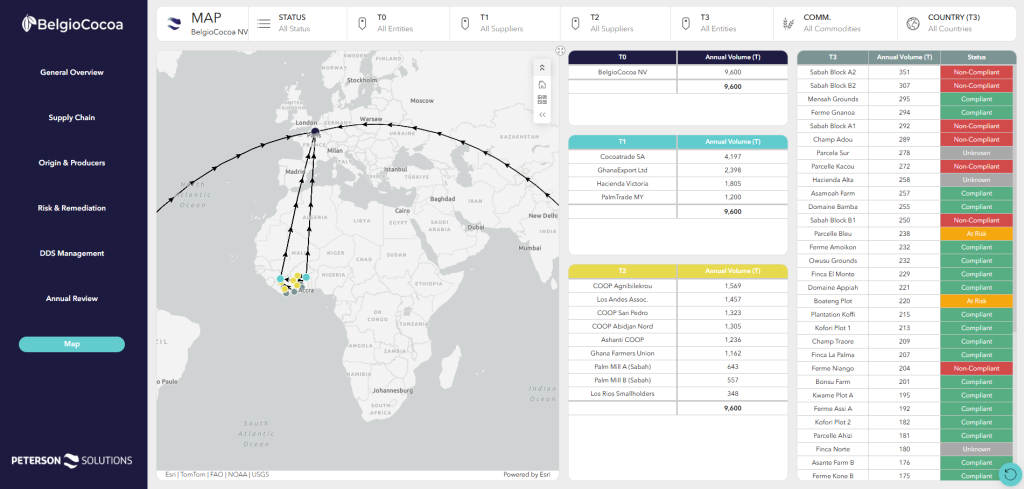
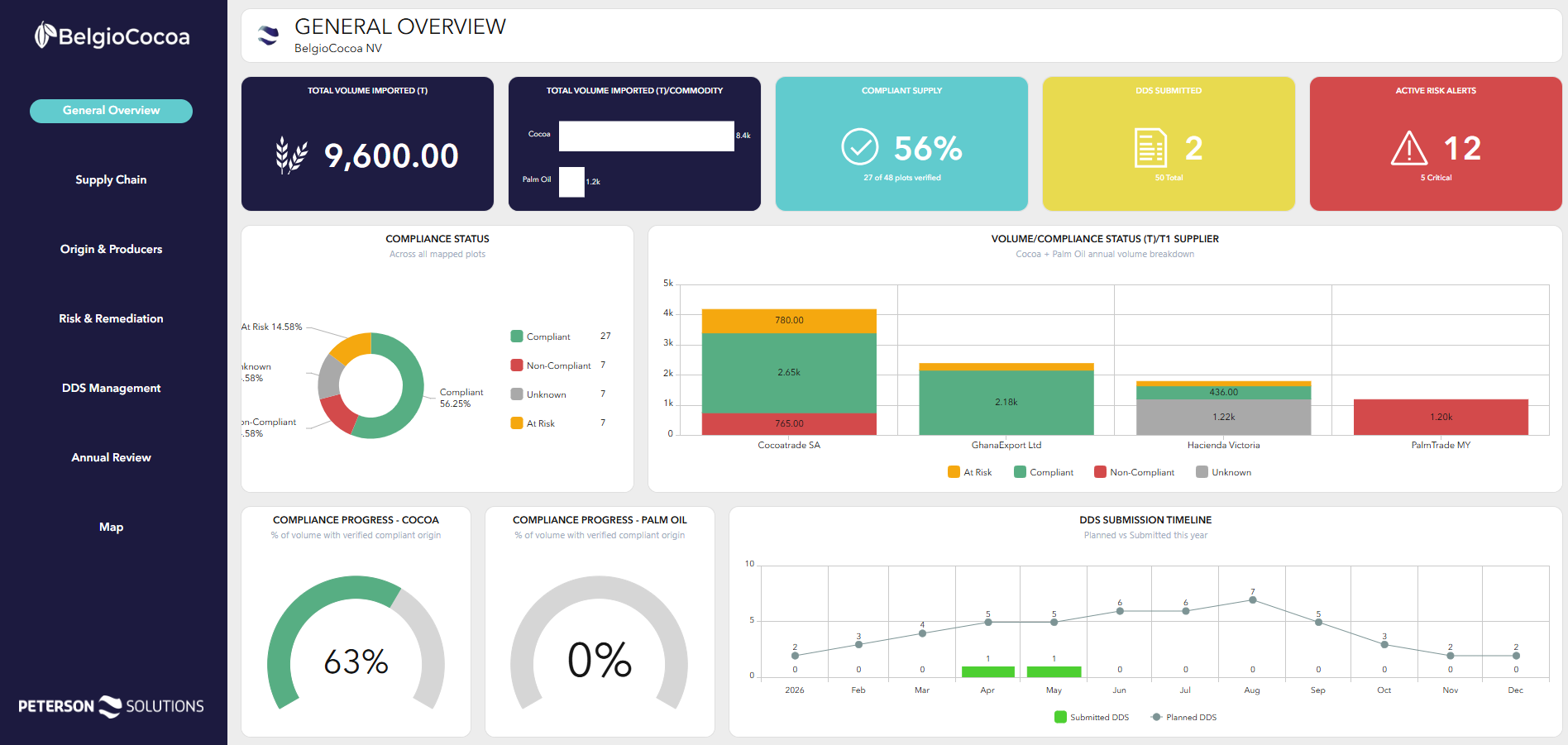
Our EUDR compliance software covers the whole due diligence process: supplier mapping, plot geolocation, deforestation checks, risk assessment and due diligence statements. And Peterson experts confirm every plot that raises a flag.
- Every plot, point or polygon. Plot locations collected, checked and linked to the supplier and the product they supply.
- Three levels of deforestation check. From a fast database screen to machine learning with expert review, depending on the risk.
- Direct connection to the EU Information System (TRACES). Due diligence statements are prepared from your data and submitted through the API.
- Proven at scale. 6,000 suppliers monitored for EUDR in a single programme.
No geolocation, no statement. No statement, no shipment.
Under the EU Deforestation Regulation (EUDR), from 30 December 2026 products containing cattle, cocoa, coffee, oil palm, rubber, soya or wood can only be placed on the EU market or exported from it with a due diligence statement. For micro and small companies the date is 30 June 2027. The statement has to be backed by data most companies don’t hold yet.
Our EUDR compliance software brings these three jobs together, with people behind it who know your sourcing regions.
- The data sits with your suppliers. You need the location of every plot your products come from. That information sits with suppliers several tiers away, often without GPS or digital tools.
- Coordinates aren’t proof. A pin on a map doesn’t show that the land wasn’t deforested after 31 December 2020. You need a check you can explain to an authority, and a decision for every plot that raises a flag.
- Every shipment needs a statement. Every shipment must be covered by a statement in the EU Information System, with the right HS codes, volumes and origins. Typed by hand, that work grows with every shipment, and so do the mistakes.
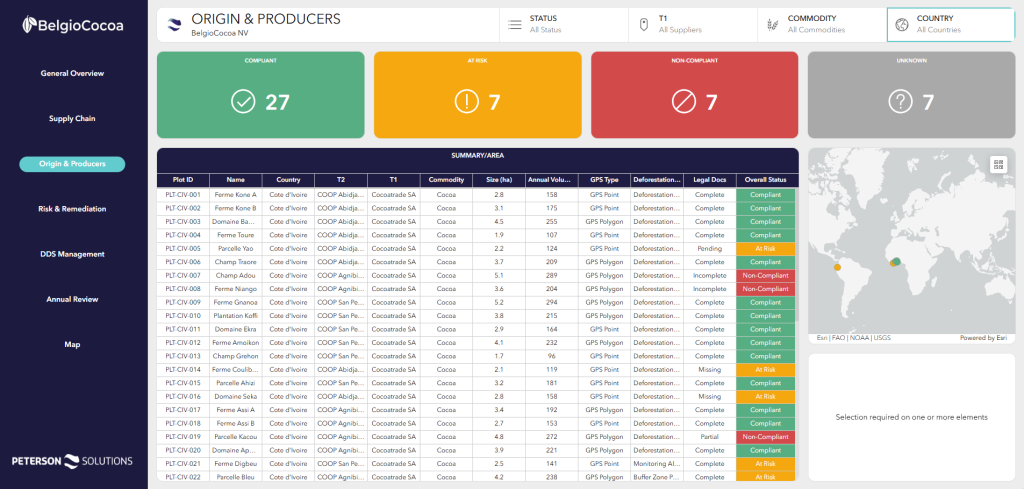
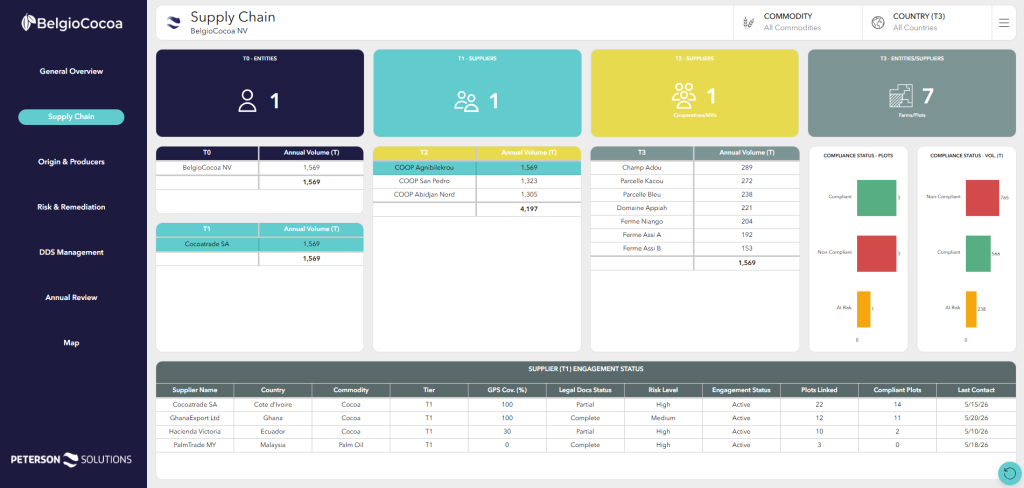
How the software works, step by step
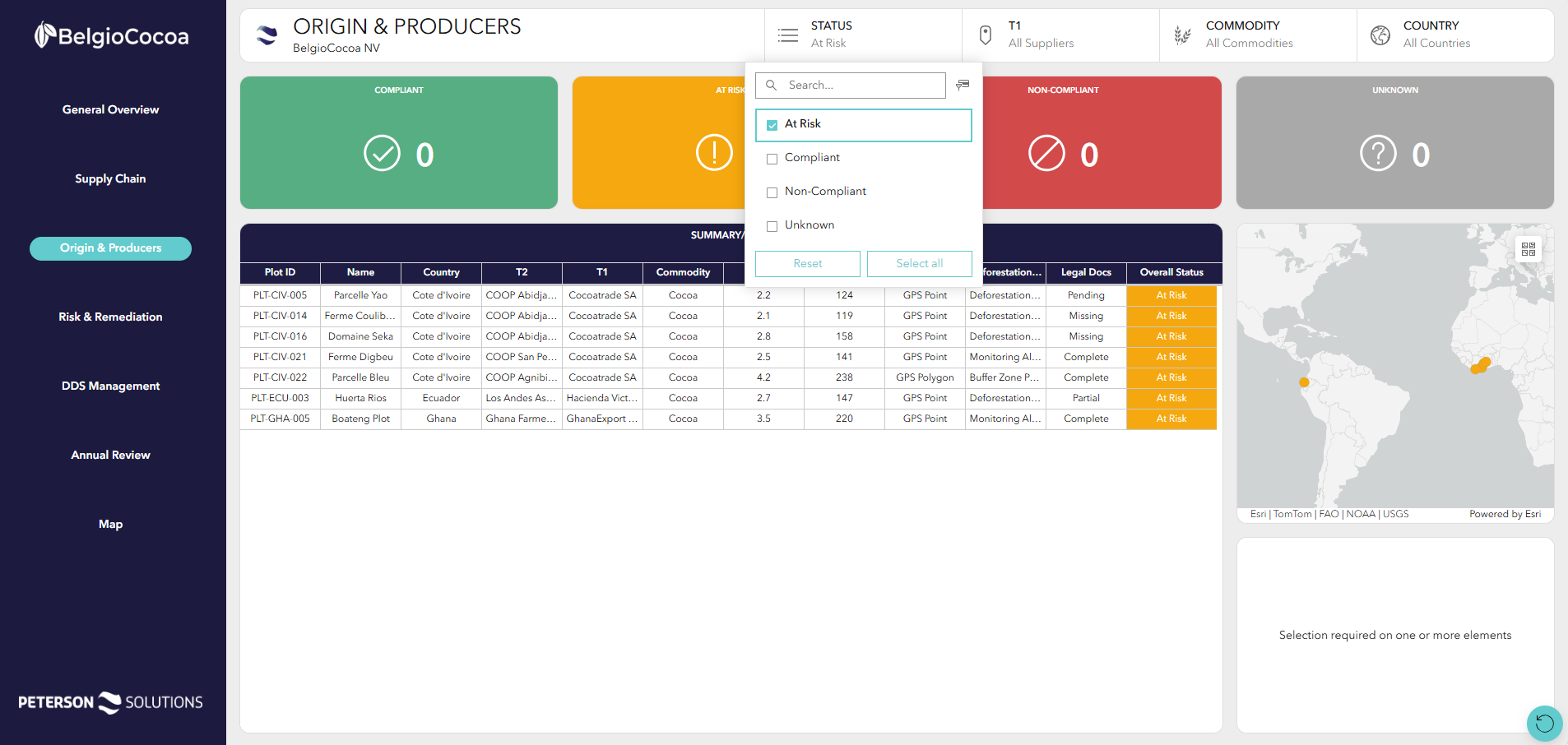
The software follows the way EUDR due diligence actually works: collect the information, assess the risk, reduce it, then file. Each step leaves a record you can show.
Step 1
Map your supply chain
Load your suppliers, see which ones are in scope and where the data gaps are. Readiness scorecards show who is ready and who needs help.
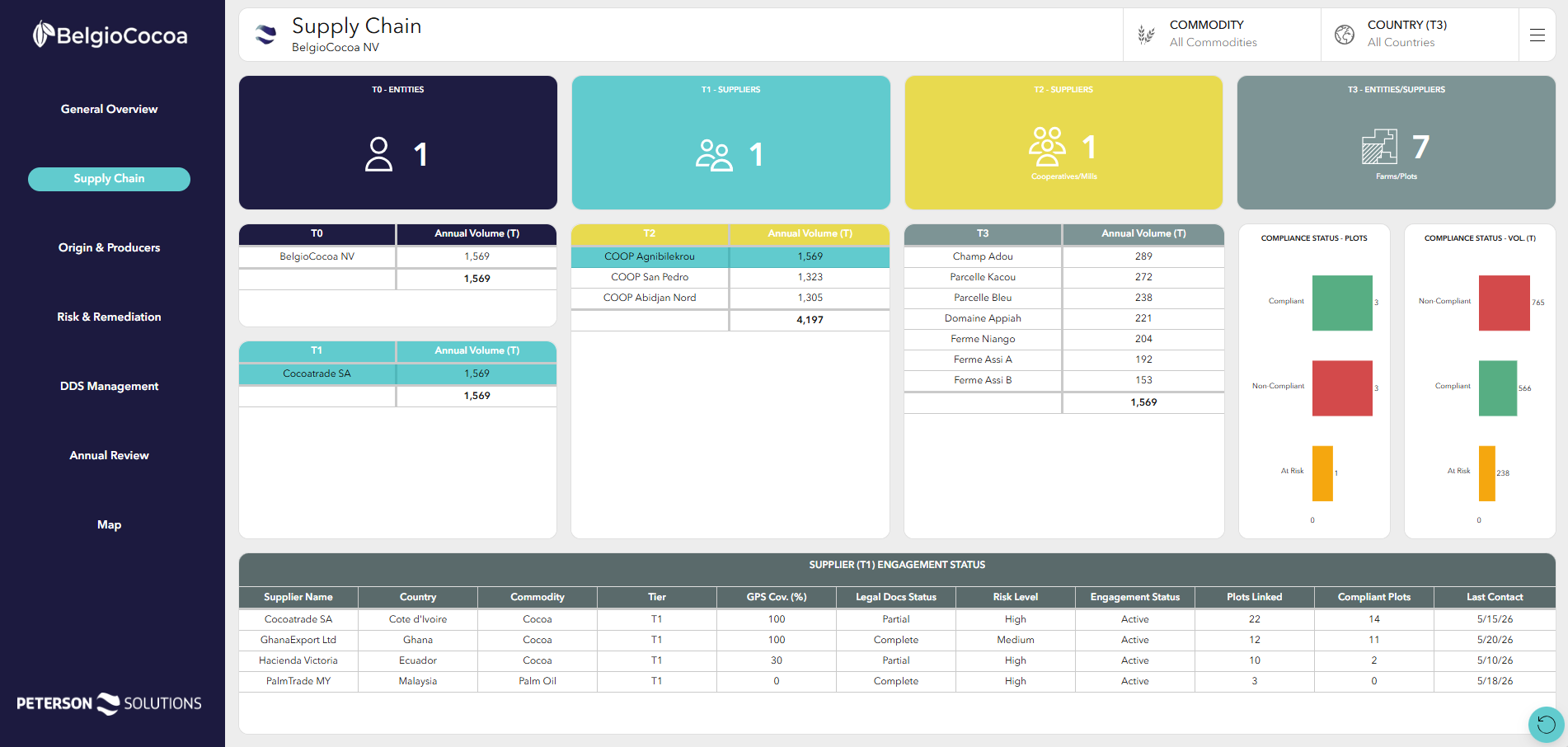
Step 2
Collect plot data
Suppliers add their plots as GPS points or polygons, or upload GeoJSON files. They can do it themselves from a phone or computer, or our team collects it with them.
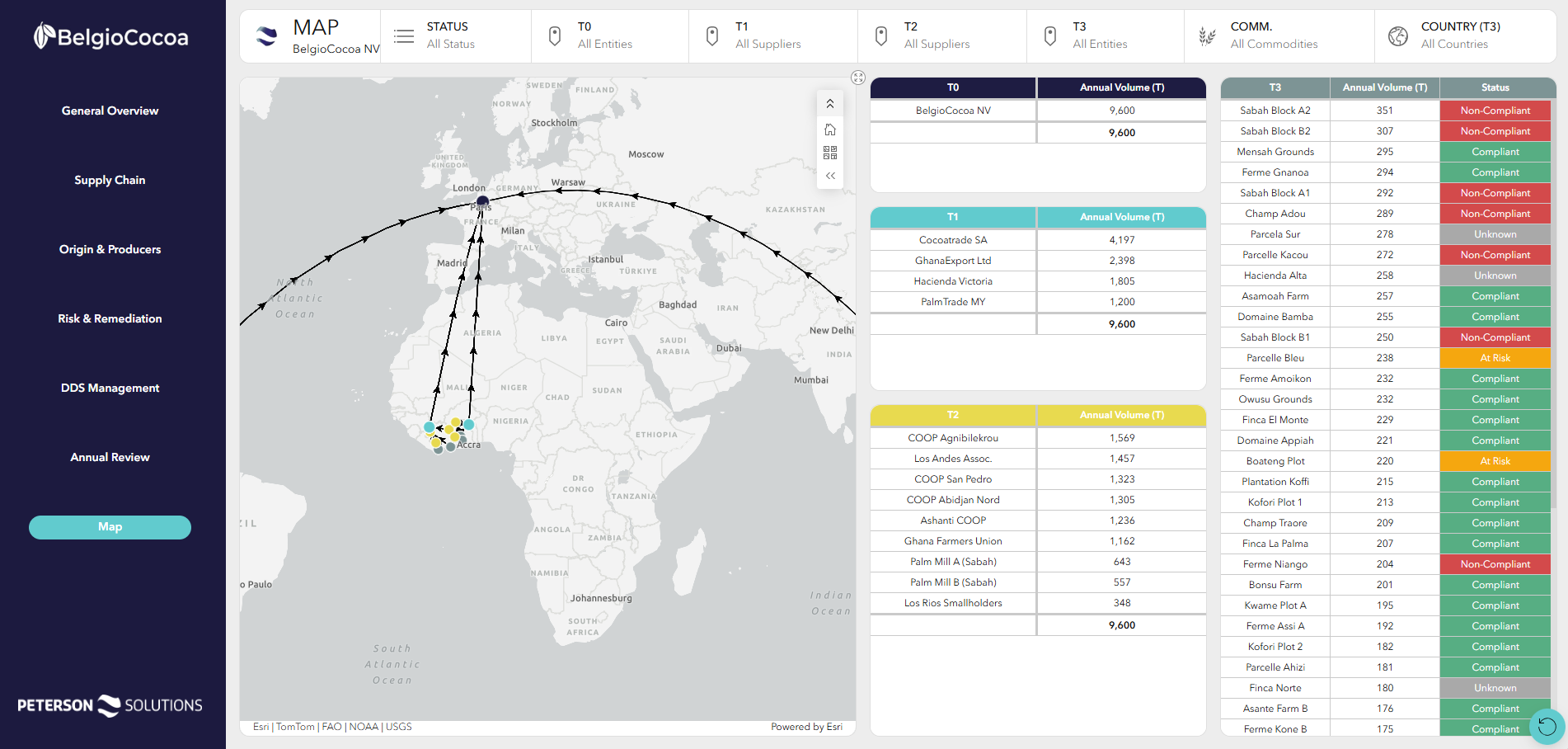
Step 3
Check for deforestation
Every plot is compared with the 31 December 2020 cut-off. You choose the depth of the check: a database screen, a machine-learning analysis, or machine learning plus review by our experts.
Step 4
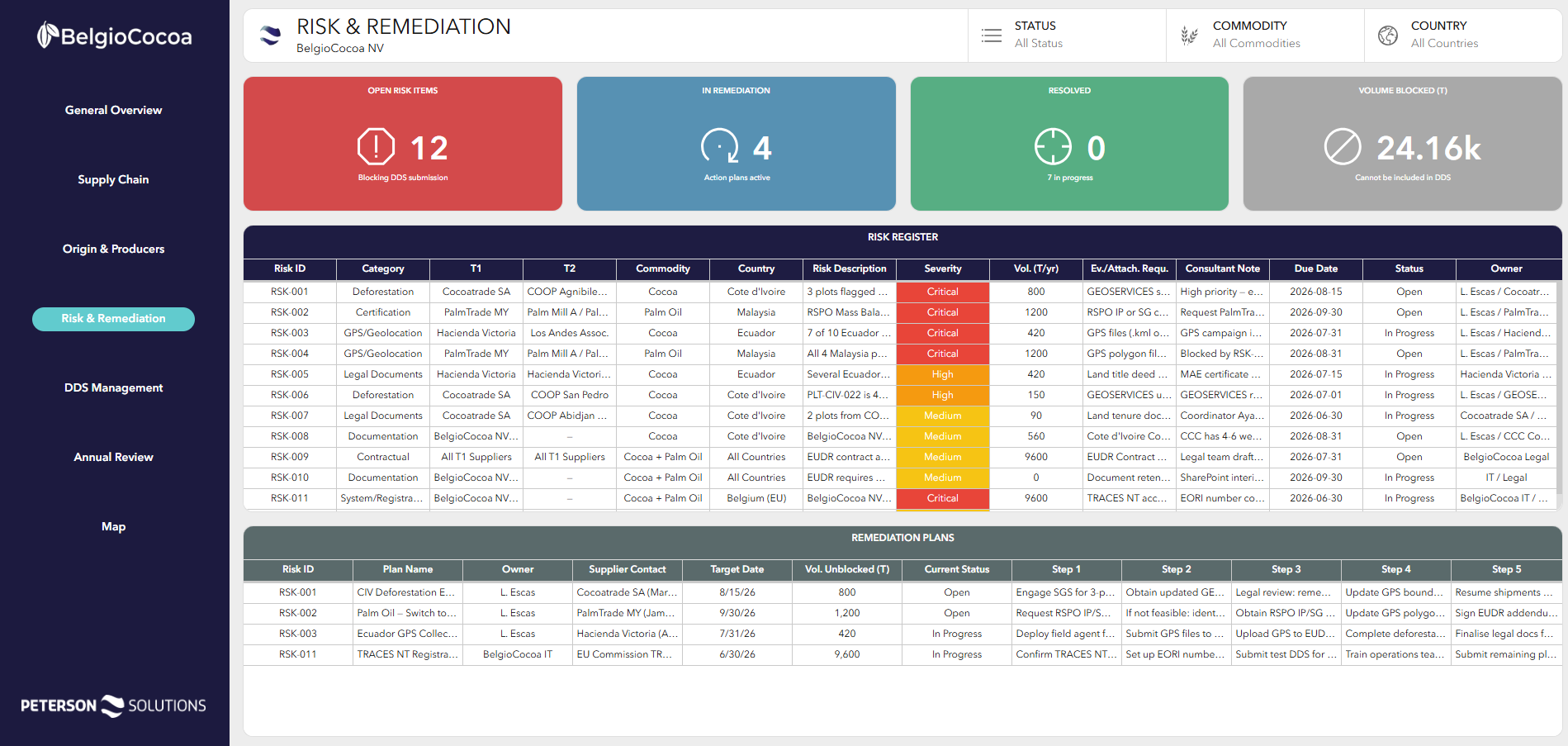
Assess and reduce the risk
Risk is scored by country, supplier and plot. Flagged plots get a decision and an action plan, and volume from non-eligible plots is kept out of your statements.
Step 5
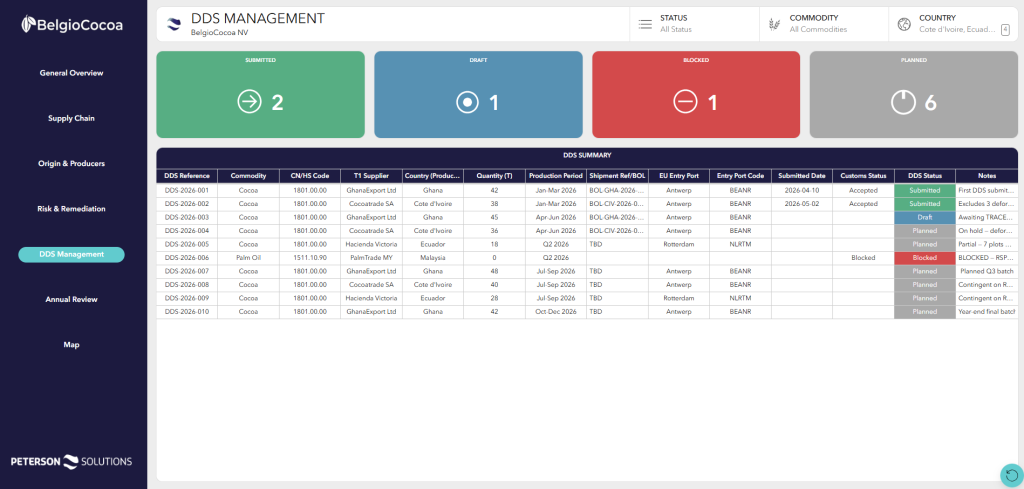
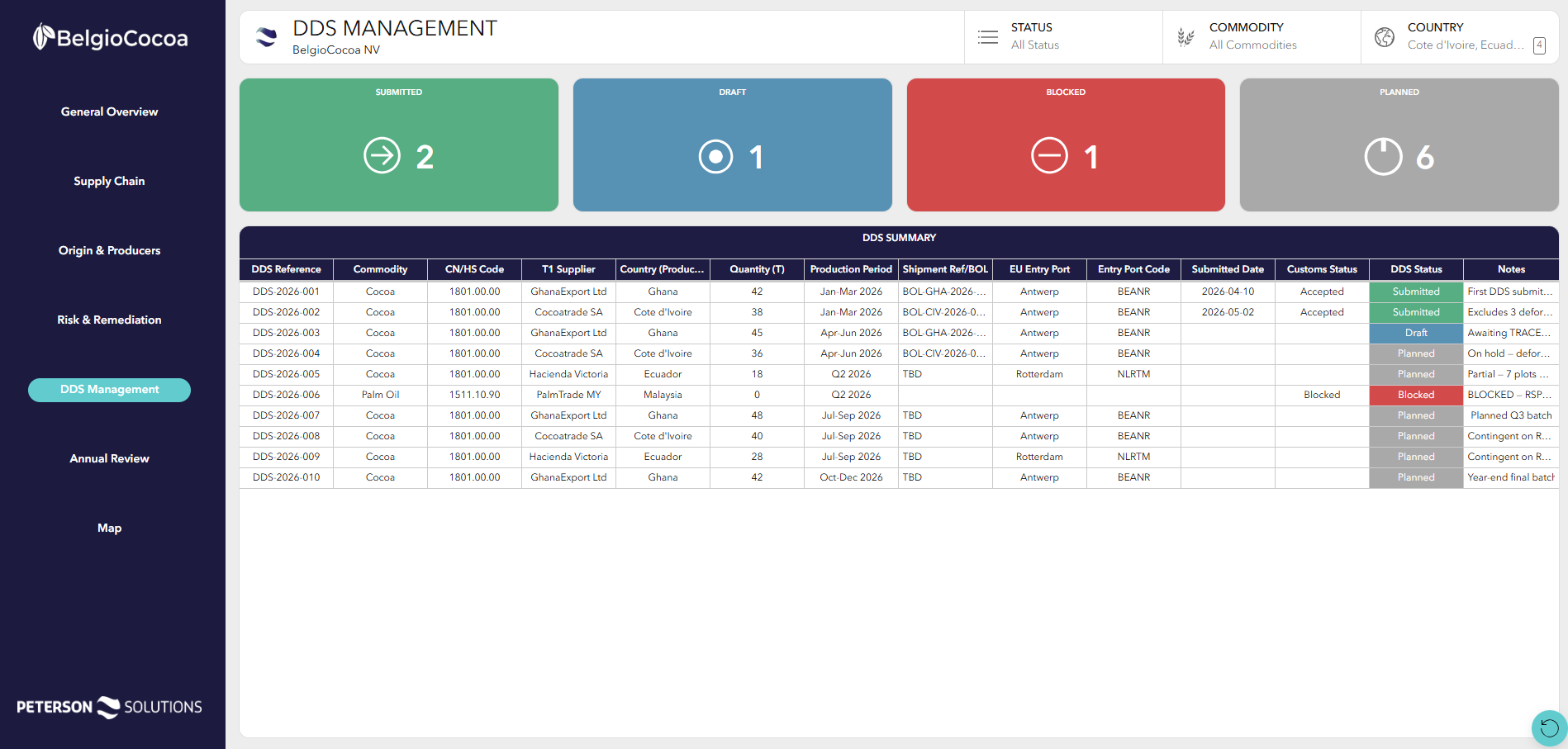
Submit your statements
HS codes, volumes, origins and plot locations are checked before submission. Statements go to TRACES through a direct API connection, and every reference number is stored.
Step 6
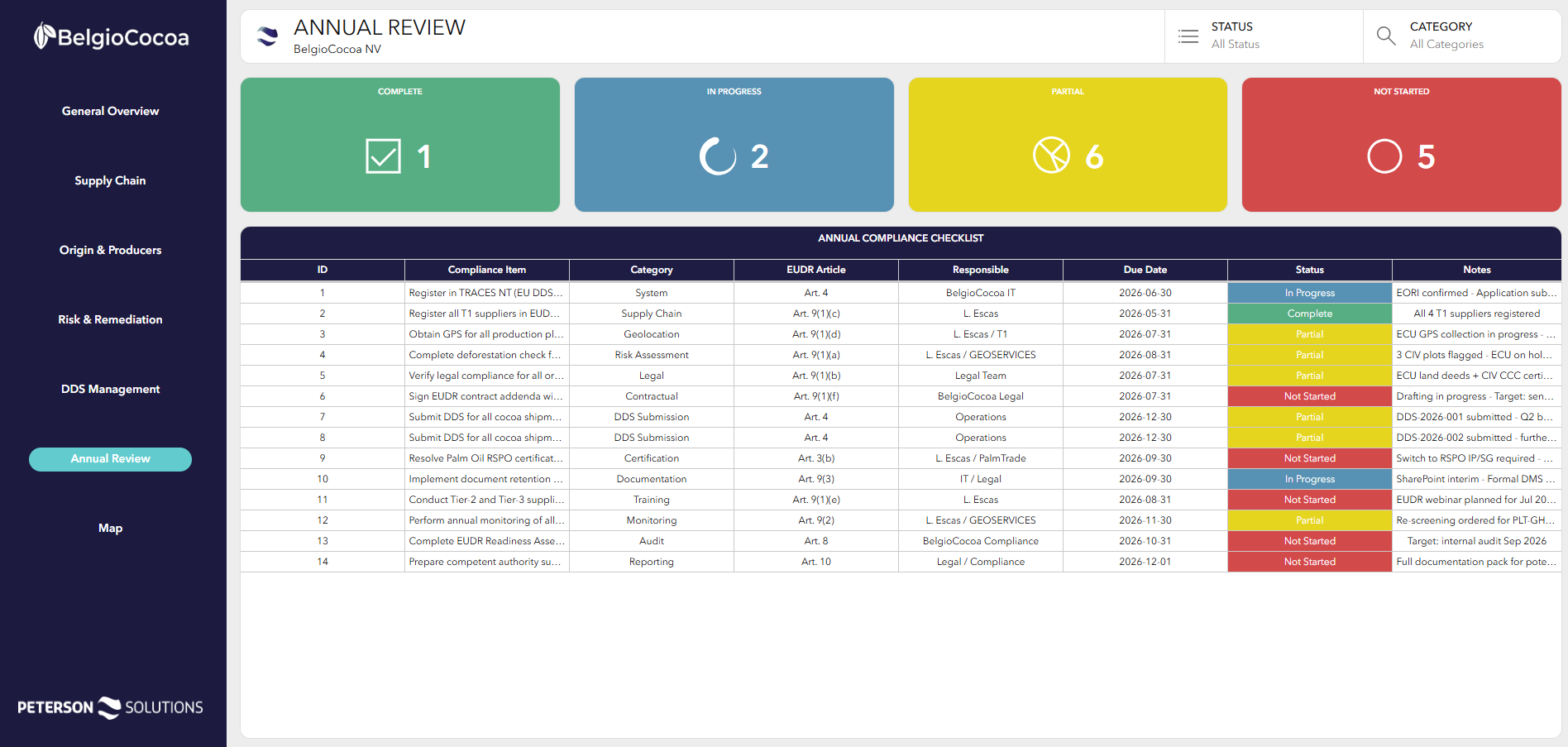
Stay compliant
Suppliers and risks are monitored over time, and your system is reviewed each year against new guidance from the Commission.
See the EUDR compliance software for yourself
Take an interactive tour, from supplier map to submitted statement.
A flagged plot is not a verdict
EUDR is not fully automatic, whatever a dashboard suggests. Satellites raise alerts, but someone has to decide what they mean and record why. That’s where our team comes in.
Need help designing your EUDR due diligence system? See our EUDR services →
Talk to our experts
- Experts who confirm. When a plot is flagged, our specialists review it and confirm whether it complies, and the decision is recorded as evidence. This expert review is included, not an add-on.
- When the polygon is missing, we go and map it. Our teams work with suppliers in their own regions: interviewing them, training them, or collecting the data on site.
- Two ways to engage suppliers. We collect the data with each supplier for you, or we train your suppliers to do it themselves.
- Your level of support. Use the software on your own, with our EUDR experts alongside you, or have us run your due diligence for you.
One evidence trail, not another silo
The EUDR compliance software runs on Peterson Solutions Hub, together with our other software. Your suppliers and plots are recorded once and used everywhere.
- Supply chain mapping software: map your suppliers down to tier 3 and the plot with a cascading survey, and reuse that map for your EUDR due diligence.
- Certification and audit management software: collect legality documents, certificates and supplier evidence, with action plans and a full audit trail.
Secure, and connected to the systems that matter
Role-based access
Each supplier sees only what’s assigned to them; reviewers and auditors get their own view.
Full audit trail
Every answer, review, decision and submission is recorded.
Connected to TRACES
Direct connection to the EU Information System (TRACES) for your due diligence statements.
EUDR due diligence, already running
6,000 suppliers
monitored for EUDR in a single programme
10 countries
mapped for one soy supply base
7 EUDR commodities
covered: cattle, cocoa, coffee, oil palm, rubber, soya and wood
80+ countries
with Peterson experts on the ground who map and check plots
Not sure where your suppliers stand?
Tell us your commodities and suppliers, and we’ll show you the path from plot data to submitted statement.
Talk to our experts