
From Obligation to Decision: What Companies Need Next on EUDR
Companies placing products on the EU market have already laid the groundwork to comply with the EU Deforestation Regulation (EUDR). What is still missing is clarity on how to demonstrate that compliance, and confidence that their systems will hold up when it matters.
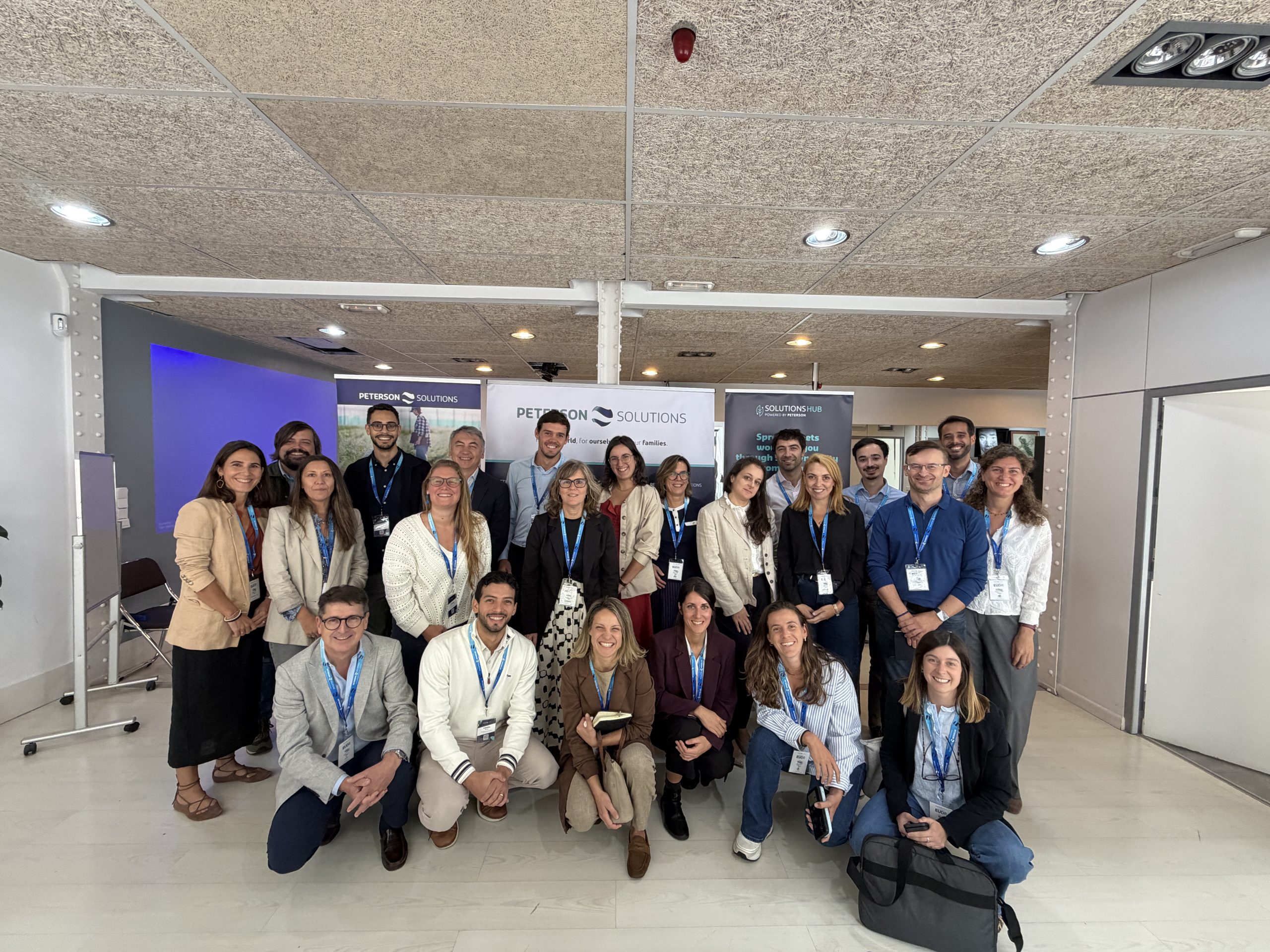
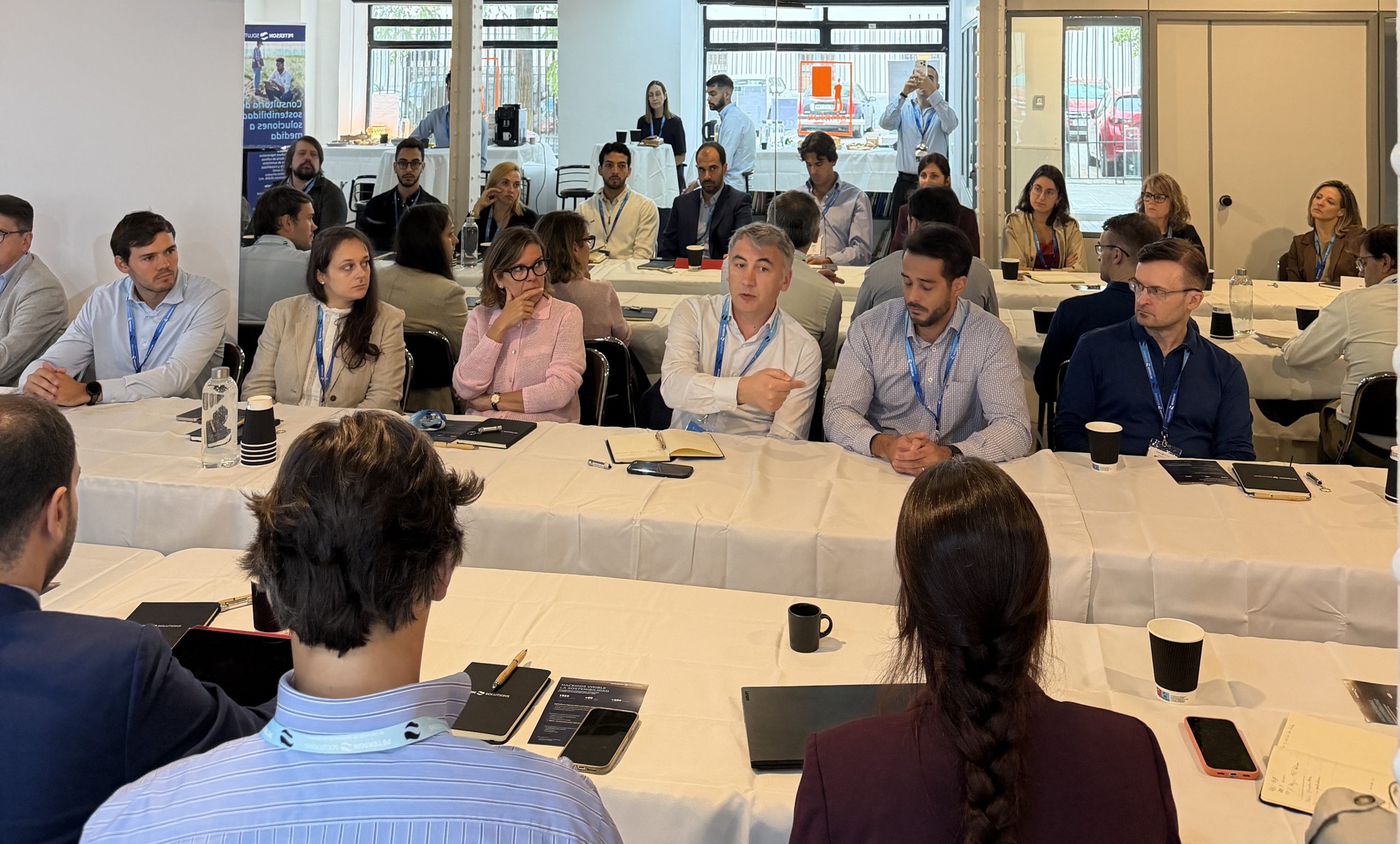
That was the main takeaway from a recent working breakfast hosted by Peterson Solutions in Madrid. Under the motto “From obligation to decision”, more than 30 executives from 15 leading companies in commodities, agri-food, textile and retail came together, including Quadra Commodities, COFCO, CEFATRA, ADM, LDC, TENDAM, ICONA CAFÉ, LIPSA and DACSA.
Ahead of the event, we also ran the EUDR Readiness Pulse, a short survey of companies across different commodities and positions in the supply chain. Its results, together with the roundtable discussion, paint a clear picture of where the market stands today and what separates companies that are truly prepared from those that only look prepared on paper.
One regulation, many supply chains, many realities
The EUDR applies to any company placing cattle, cocoa, coffee, oil palm, rubber, soya or wood, and products derived from them, on the EU market or exporting them from it. Where the company is based does not matter. Producers in South America, Africa and Southeast Asia, traders in global commodity hubs and brands selling into the EU are all part of the same compliance chain.
The Readiness Pulse reflected that diversity. Coffee was the most represented commodity (48% of respondents), followed by cocoa (30%), with soya, palm oil and rubber at 17% each, wood at 13% and cattle at 4%. Respondents also sat in very different positions in the chain: EU producers (31%), EU importers (26%), EU exporters (17%), suppliers outside the EU (17%) and traders or distributors (9%).
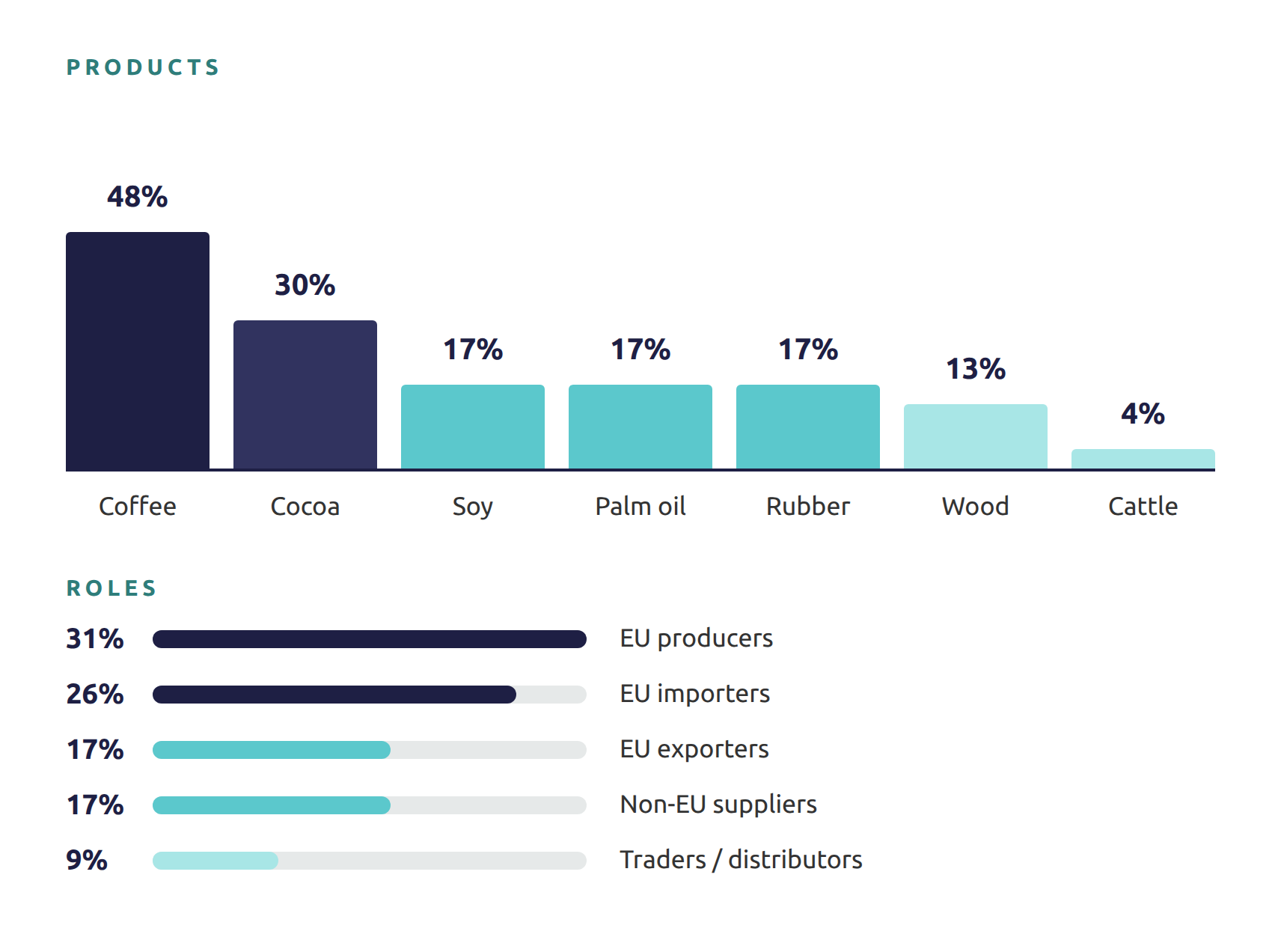
Why this matters: the regulation is the same for everyone, but the starting point is not. An importer, a producer and a non-EU supplier face different operational problems, so there is no single EUDR roadmap that fits every company.
Readiness is advancing, but at very different speeds
When asked where they stand today, companies were spread across every stage of the journey:

In other words, 9% have not started, 34% are still assessing and designing their processes, 34% are implementing and piloting, and 22% describe themselves as operational.
The most revealing finding came next. Even among companies that consider themselves operational, average self-reported confidence was just 4 out of 10. Confidence levels varied widely across every other stage too.
Among the companies at the breakfast, the picture was similar. 87% already have due diligence processes in place and 65% have made a significant investment in internal and supplier training over the last 12 months. Yet 100% agreed they need more specific guidelines on what documentation competent authorities will require.
The insight: being advanced in the process does not mean feeling ready. Having a process is one thing; knowing it will stand up to scrutiny from an authority or an auditor is another. That gap between activity and confidence is where most companies need to focus now.
What companies find hardest
When asked about their main challenges, respondents pointed to several areas at once:
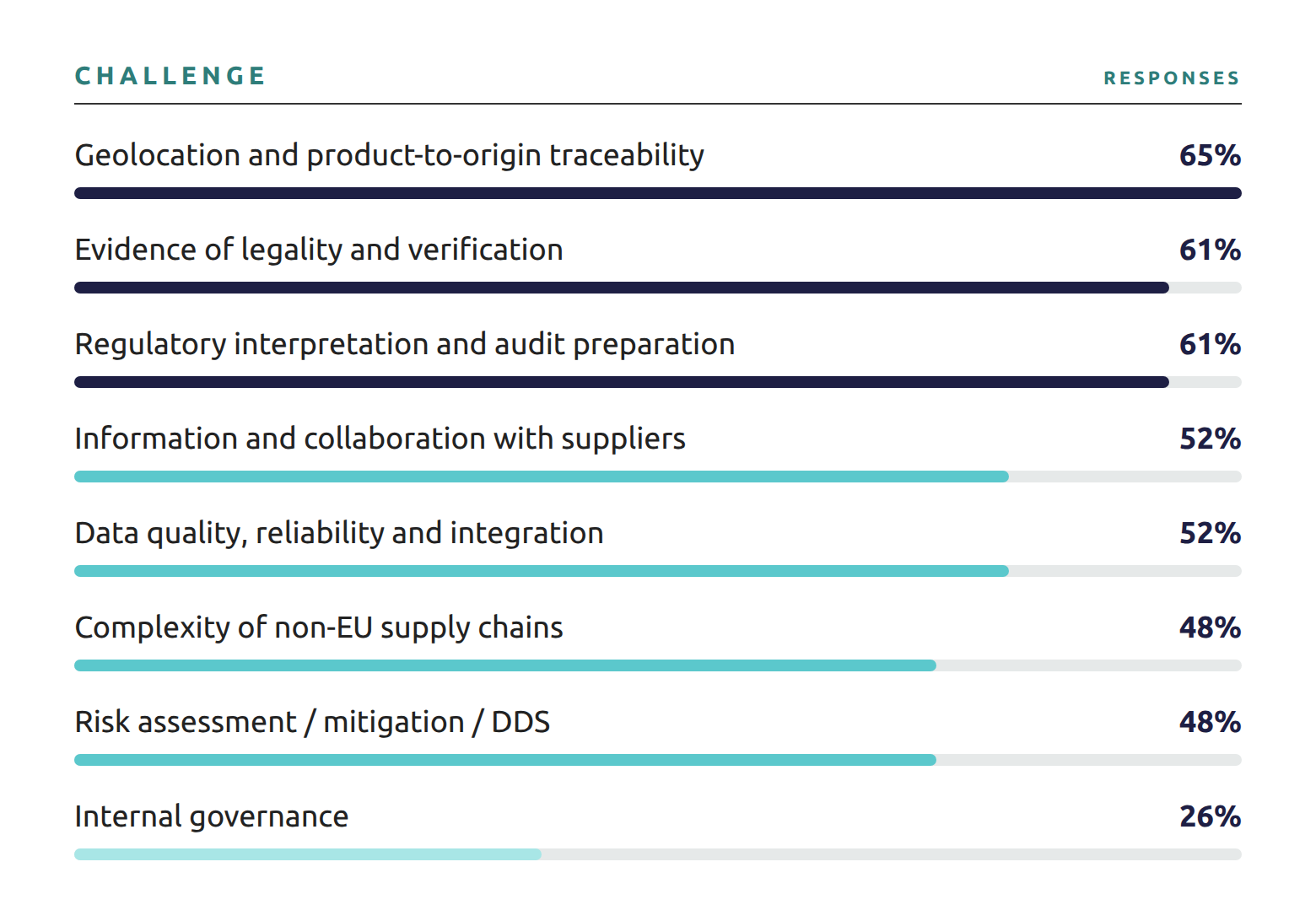
Two things stand out. First, the challenge is not one isolated piece: it is connecting data, origin, suppliers and process so they work together. Second, internal governance ranks last. Most of the hardest problems sit outside the company’s own four walls, in the supply chain and in the evidence that comes from it.
Attendees also flagged two structural issues. The EU’s TRACES information system, where due diligence statements are submitted, is a critical asset, and compliance will depend on its ability to handle the volume of data companies worldwide will generate. And traders and importers often have limited visibility of where products come from, especially in long, multi-tier supply chains.
The roundtable focused on three of these challenges and how companies are addressing them in practice.
Challenge 1: Getting the whole supply chain on board
EUDR is a regulation built on collaboration. No company can comply alone, because much of the information it needs is held by others. In our experience, less than half of affected suppliers are currently prepared to provide the information required.
The difficulties are consistent across sectors:
- Small and indirect suppliers have more difficulty accessing and sharing information.
- Active participation from every actor in the chain is needed, not just the first tier.
- Response quality is a problem in itself: receiving information does not guarantee it is complete, sufficient or valid for EUDR.
- Ongoing follow-up is required, because the relationship has to be maintained over time, not built once.
Most companies have visibility up to a certain point in their chain, but not all the way back to the plot of origin.
What works:
- Map the chain and understand its context. Are there country or regional initiatives you can build on instead of starting from scratch?
- Assess supplier maturity. Do your suppliers know about EUDR? Do they actually hold the information you need?
- Explain the why. Suppliers respond better when they understand why the information is being requested and what it will be used for.
- Support, don’t just request. Ask what suppliers need from you, consider pilot tests, and build trust step by step.
One model shared at the meeting puts this into practice in three steps: monthly purchase mapping to identify which materials fall under the EUDR, risk analysis by supplier, and progressive collection of origin and traceability data from high-risk suppliers.
A participant from a company in the agri-food sector summed it up:
“A more rigorous process at origin allows us to identify and mitigate risks before they reach us. This reduces operational friction in the long run and gives companies a competitive advantage.”
Challenge 2: Knowing what information you actually need
There is an important difference between asking for information and knowing which information you need. A company can send questionnaires, receive documents and fill a folder with evidence, and still not have what it needs to reach a solid conclusion.
Try this exercise. Imagine you are told that a shipment that has just arrived at an EU port will be checked, and you have to demonstrate that it complies with EUDR. What exactly would you need to show? At what level of detail? Which document would prove it? And how would you connect that information to the specific product you sold?
To answer, five types of information have to come together:
- Geolocation: locating every plot of origin.
- Traceability: following the product back to that origin through the chain.
- Legality: evidence that production complied with applicable laws.
- Critical points: identifying where mixing or loss of traceability can happen.
- Reliability: ensuring data is consistent and verifiable.
The insight: the question is not how much data you have, but whether you can use it as evidence for a defensible conclusion. The weak point is usually the link between the information and the product. Locating the origin is not enough; you need to prove that the data is reliable and genuinely tied to what you placed on the market.
A simple test for your evidence:
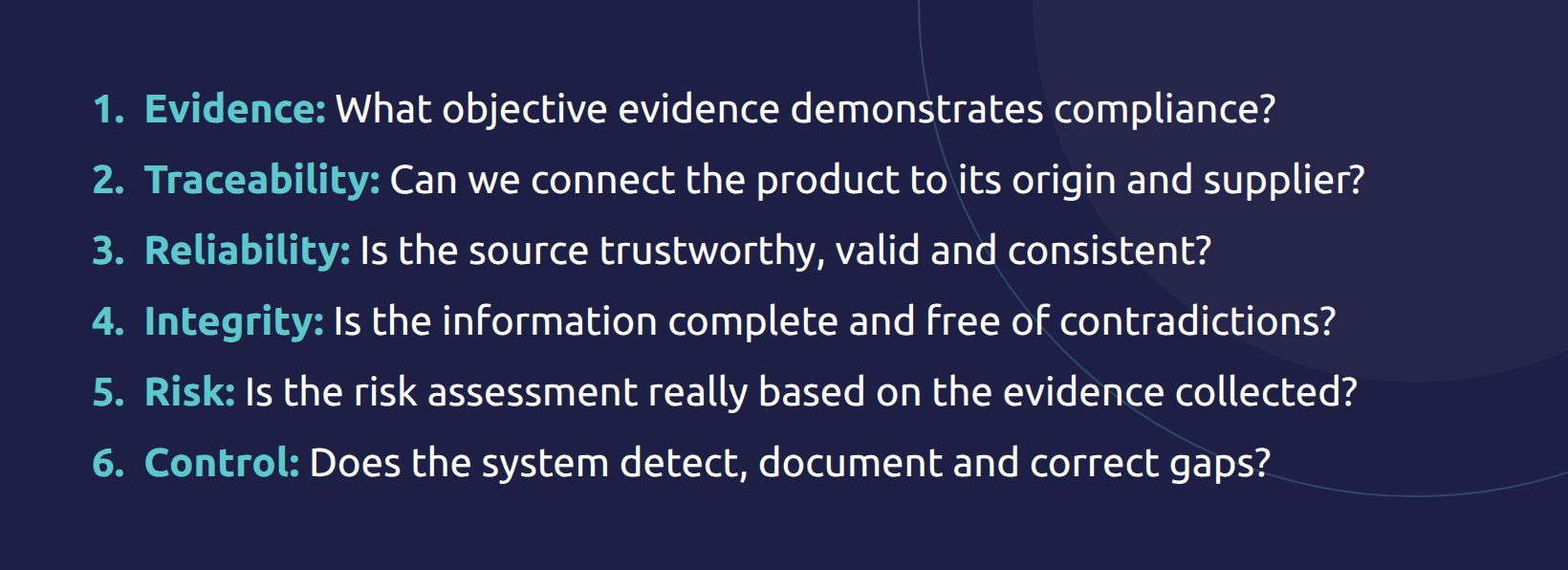
If the answer to any of these is unclear, your information is not yet audit-ready. Without verifiable evidence, there is no defensible due diligence conclusion.
Challenge 3: Moving from project to operations
Having a documented procedure is very different from having one that works with your real data, your real suppliers and your real teams. Being documented does not mean being ready to operate.
The gaps usually appear in four places:
- From paper to reality: processes designed without considering available resources rarely survive contact with day-to-day operations. Large companies often have several realities inside one organisation.
- Integrated operations: the procedure has to fit existing processes and systems, not run alongside them.
- Exception management: what happens when data does not arrive, does not match or changes? This is where most systems break.
- Controls and monitoring: issues need to be detected and corrected in time, not discovered during an inspection.
A practical path to a system that works:
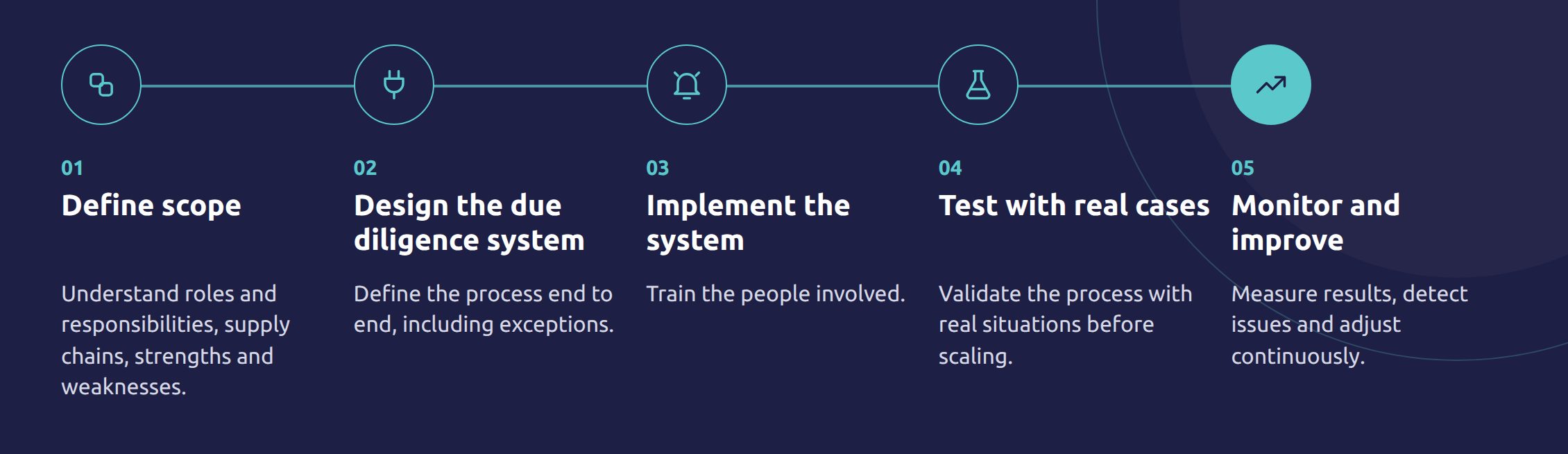
The goal is to turn a compliance project into a sustainable operational capability. And the earlier systems are tested, the more time there is to fix what does not work.
From the textile and retail sector, one participant added a further dimension. These efforts already create internal operational value, but their impact on consumers will depend on whether they eventually translate into labelling or clear in-store differentiation.
Private sector and regulators, together
If one thing became clear, it is that implementation will be more efficient if companies and regulators work in a coordinated way. Companies have invested in processes, training and supplier engagement; what they need now is a shared understanding of what good evidence looks like.

A participant from Peterson commented:
“The private sector and public authorities need to work together on defining clear standards.”
Another participant from Peterson added:
“Companies are here. They are investing. The authorities can be a partner in clarifying what we need to make sure we all comply correctly.”
And a third brought an international perspective:
“International experience shows that regulatory clarity speeds up compliance.”
So what does being ready actually mean?
The conversation came down to five observations:
- Companies are very diverse in commodities, roles and supply chains.
- They are at very different points in their preparation.
- The main challenges are very concrete.
- Many of those challenges sit outside the company’s own walls.
- Having a process designed is not the same as having tested it.
That is why there is no single EUDR priority. The right next step depends on where you are today.
Three ideas to guide your next move:
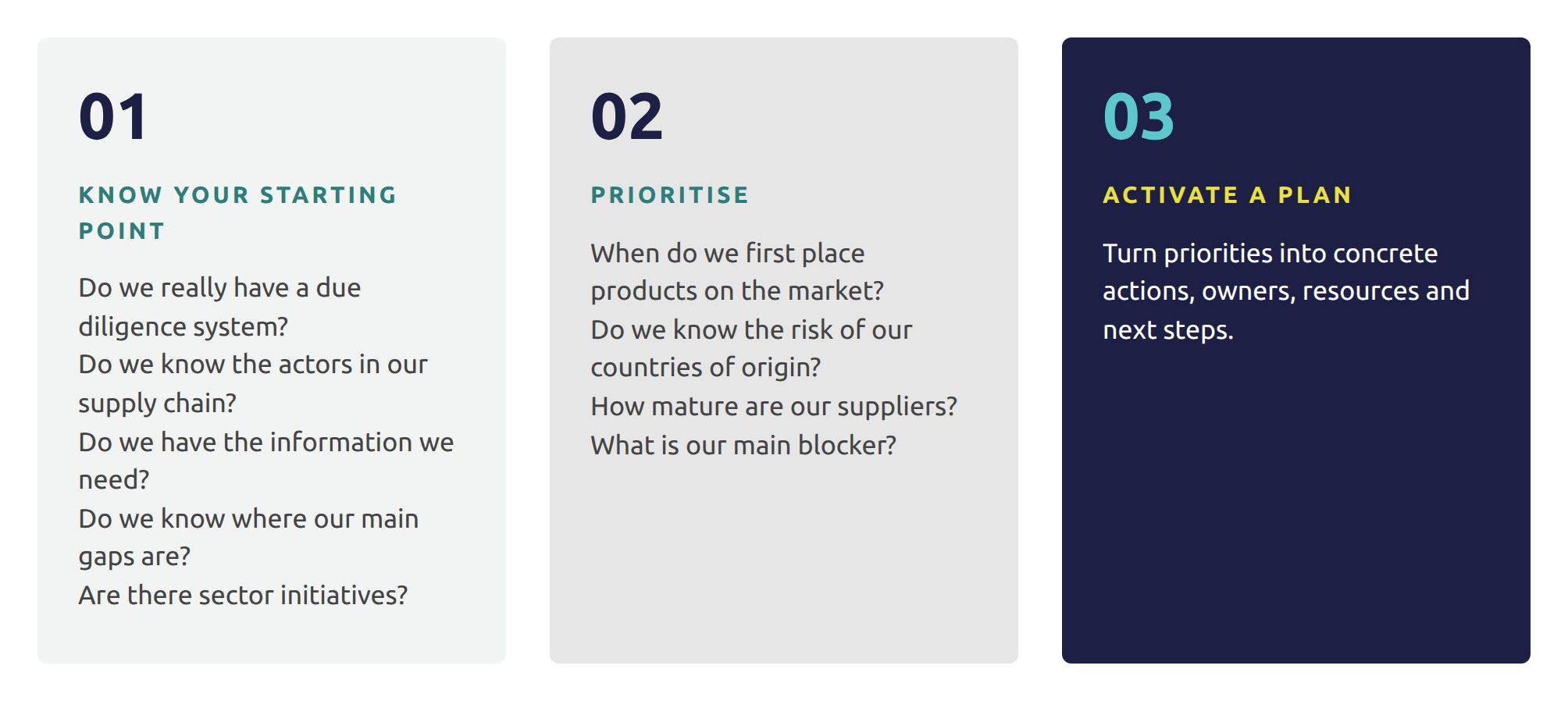
1. Know your starting point. Before deciding what to do, be honest about your real situation. Do you actually have a due diligence system? Do you know every actor in your supply chain? Do you have the information you need? Do you know where your main gaps are? Are there sector initiatives you can join?
2. Prioritise. Not everything has to be solved at once. Ask yourself when you will first place products on the market, how risky your countries of origin are, how mature your suppliers are and what your main blocker is today. Let the answers set the order.
3. Activate a plan. Turn priorities into concrete actions with owners, resources, next steps and a way of checking that the system really works.
The objective is not simply to run an EUDR project. It is to build a capability your organisation can sustain over time.
How can Peterson Solutions help you?
Peterson Solutions is a global sustainability consultancy that supports companies in the agri-food, textile and commodities sectors in complying with regulations such as EUDR, CSRD and CBAM. Backed by more than 100 years of experience and a presence in over 80 countries, we work with more than 500 companies on deforestation risk and decarbonisation.
Because no two companies start from the same place, our EUDR approach is modular and can be combined according to where you are today:
- Due diligence system: gap analysis of your current system, followed by the design and implementation of a complete EUDR-compliant due diligence system.
- Supplier readiness (non-EU): engagement, assessment and support to help suppliers meet EUDR requirements.
- Verification and controls: independent verification through Control Union’s EUDR Verification Protocol, from plot to vessel.
- Due diligence execution and TRACES submissions: assessment of due diligence and authorised submission of Due Diligence Statements in TRACES.
- Training and capacity building: training for internal teams and suppliers, remotely or on site, adapted to each company.
- Technology and traceability: digital traceability, deforestation risk analysis and long-term data management through the Peterson Solutions Hub (PSH).
Want to know where your company stands and what to prioritise next? Get in touch with our team at eudr@onepeterson.com.